



- The Child Tax Credit (up to $2,200 per child) is for having a kid. The Child & Dependent Care Credit and a Dependent Care FSA are for paying for care so you can work. You can claim the Child Tax Credit alongside one of the care benefits.
- Starting in tax year 2026, the OBBBA permanently raised the Dependent Care FSA limit from $5,000 to $7,500 and lifted the top care credit rate from 35% to 50%.
- The FSA and the care credit can't cover the same dollars - money you run through an FSA reduces the expenses you can claim for the credit.
- If you're self-employed or a more-than-2% S-corp owner, you generally can't fund a Dependent Care FSA, but you can still claim the care credit.
- A congressional report found only about 12% of families with children claim the care credit. Most of this money goes unclaimed.
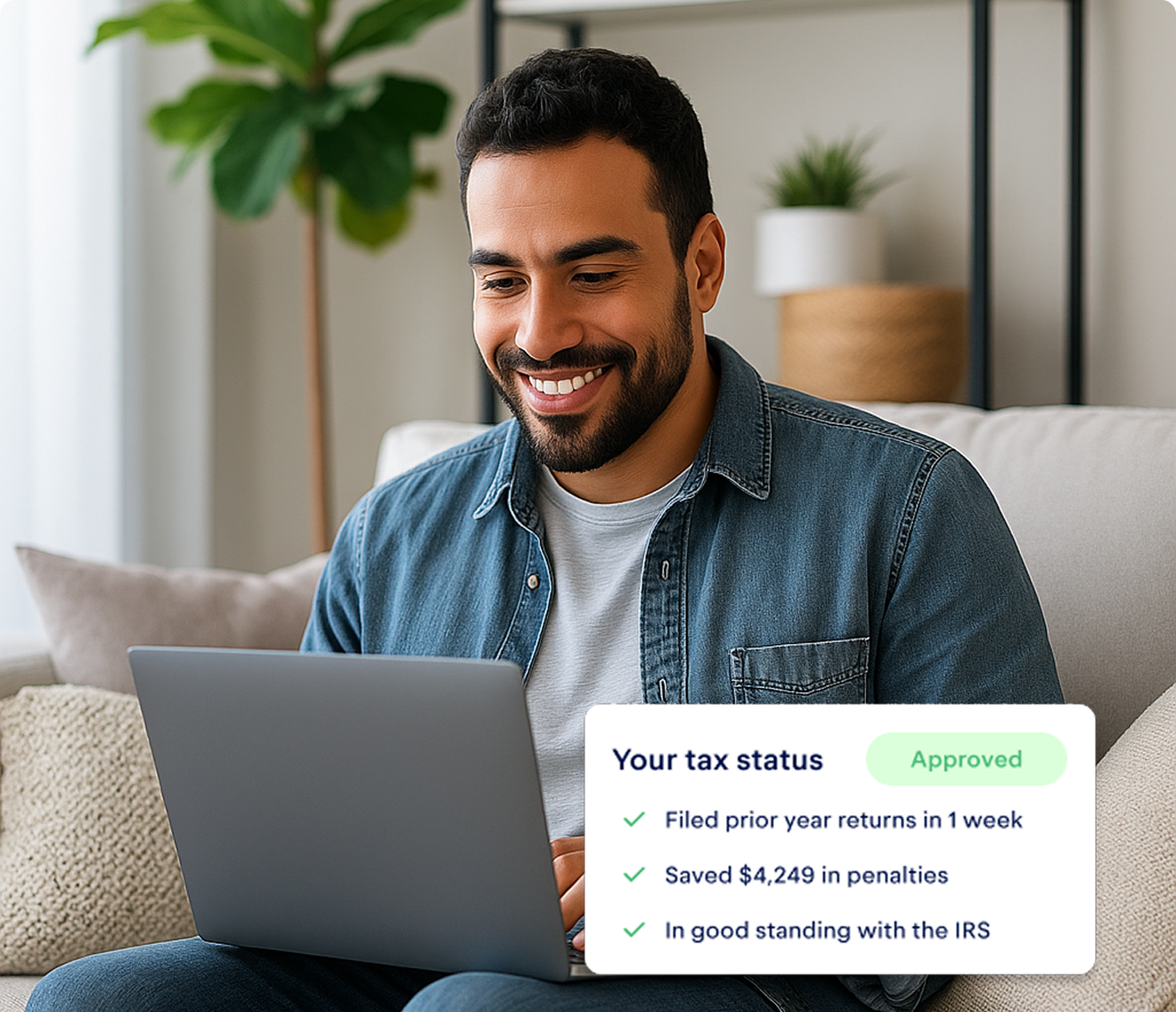

Child care costs are crushing families. These tax breaks can help.
While parenthood can bring priceless joy and endless fulfillment, it's no secret that raising a child in the US is increasingly costly for many. A 2023 study by Lending Tree reported that the 18-year cost of raising a child grew to $303,418 after tax exemptions and credits - that's about $16,857 per year. By far, the largest expense for parents is day care, often rivaling rent or a mortgage.
According to federal guidelines, childcare is considered affordable if it consumes no more than 7% of household income. So with childcare costs averaging ~$28,000 per year, a household needs to be earning ~$400,000 for it to be considered affordable. Guess what percentage of American households are earning $400,000 in income? Less than 5%, according to US Census data (2024). Ouch!
And yet, parents aren't taking advantage of deducting the cost of childcare on their taxes. As reported by CNBC, a June 2026 report from Congress's Joint Economic Committee found that only about 12% of taxpayers with children claim the Child and Dependent Care Credit, and fewer than half of private-sector workers have access to a Dependent Care FSA.
If you're self-employed, the gaps get wider. While W-2 employees are privy to the dependent care FSA from their employers, that benefit generally isn't available to you, and the rules around "earned income" can disqualify you in a low-income year. In this guide, we'll walk through how to take advantage of as many tax breaks as possible to help you minimize your tax burden.
Hopefully, that's one less thing for you to worry about after the sleepness nights, toddler tantrums, and daily stressors of parenthood!
What are the three main tax breaks for parents?
The three most common federal benefits aimed at families with kids are the Child Tax Credit (CTC), Child and Dependent Care Credit (CDCC), and Dependent Care FSA.
The Child Tax Credit (CTC) is the one almost everyone qualifies for, because it's tied to having a child, not to any childcare expenses. The other two only help if you pay someone to watch your kids so you (and your spouse) can work or look for work. Let's talk about it.
How does the Child Tax Credit (CTC) work?
The Child Tax Credit is worth up to $2,200 per qualifying child under age 17. The One Big Beautiful Bill Act (OBBBA) made that $2,200 amount permanent starting in tax year 2025 and indexed it for inflation going forward.
Up to $1,700 of that credit is refundable, meaning you can get it back even if it's more than the tax you owe. The credit starts to phase out once your modified adjusted gross income passes $200,000 (single) or $400,000 (married filing jointly).
There are 2 key things to know:
- You don't need any child care receipts to claim it. The CTC is about having a dependent child, not whether you have qualifying childcare expenses.
- Both you and your child now need a valid Social Security number. Starting in 2025, at least one parent (plus the child) must have an SSN to claim the credit.
You claim the CTC on Schedule 8812. Most tax software (including Keeper) calculates it automatically once you've listed your dependents.
What is the Child and Dependent Care Credit (CDCC)?
The Child and Dependent Care Credit (CDCC) helps offset what you spend on care so you can work. It applies to care for a child under 13, or a spouse or dependent who can't care for themselves.
Beginning in tax year 2026, the OBBBA raised the top credit rate from 35% to 50%. The top CDCC rate rises to 50% for taxpayers with AGI of $15,000 or less. The rate then phases down to 35%. It stays at 35% until AGI exceeds $75,000 for non-joint filers or $150,000 for joint filers, then phases down again to a 20% floor.
The expense caps ($3,000 and $6,000) stay the same. So a lower-income family with two kids could see up to $3,000 back in 2026, versus $2,100 under the old rules.
Some things to know:
- You (and your spouse, if married) must have earned income. For the self-employed, that's your net self-employment earnings. If your business posts a loss for the year, you have no earned income, and no credit. This surprises a lot of self-employed workers!
- The care has to let you work or job-hunt. Care while you're on vacation doesn't count; care during your working hours does.
- You need the provider's name, address, and SSN or EIN to file Form 2441. A nanny paid under the table can't be claimed, and may create "household employer" obligations, including payroll tax and W-2 reporting if you cross the annual wage threshold.
Let's see an example with Anna the freelance designer with two kids in daycare and $60,000 in net self-employment income in 2026. She spends $14,000 on care but is capped at $6,000 in eligible expenses. At her income, her credit rate is roughly 35%, so she claims about $2,100.
{upsell_block}
What is a Dependent Care FSA, and are you eligible if you're self-employed?
A Dependent Care FSA (DCFSA, sometimes called a Dependent Care Assistance Program) lets you set aside pre-tax pay through your employer to cover care costs. For 2026, OBBBA raised the limit from $5,000 to $7,500 per household ($3,750 if married filing separately).
Because the money comes out before taxes, you avoid both income tax and the 7.65% in Social Security and Medicare (FICA) tax on it. For someone in the 22% bracket, running $7,500 through a DCFSA can save roughly $2,200, often worth more than the child care tax credit.
However, if you're self-employed, you generally can't use a Dependent Care FSA. A DCFSA runs through an employer's cafeteria plan, and the tax code doesn't treat a sole proprietor (or a more-than-2% S-Corporation shareholder) as an "employee" who can make pre-tax salary reductions. So:
- Sole proprietors and single-member LLC owners: Excluded from pre-tax DCFSA benefits. Use the Child and Dependent Care Credit instead.
- More-than-2% S-Corp owners: Excluded from pre-tax DCFSA benefits, even if your business offers the plan to staff. Use the Child and Dependent Care Credit instead.
- Have a working spouse with a W-2 job? Their employer's DCFSA may be available to your household. That's often the best move for a self-employed family.
Example: Devon is a self-employed consultant, and his wife works at a company that offers a DCFSA. They're married filing jointly. They put $7,500 into her FSA in 2026, saving about $2,200 in taxes.
Can you use more than one of these at the same time?
Users sometimes confuse the Child Tax Credit with the Child and Dependent Care Credit.
You can stack the Child Tax Credit with the Child and Dependent Care Credit or Dependent Care FSA. One is a tax benefit for having a dependent child, whereas the others are a tax benefit for having childcare expenses.
The FSA and the care credit, though, can't cover the same dollars. Whatever you exclude through a Dependent Care FSA reduces the expenses you can run through the Child and Dependent Care Credit, dollar for dollar.
Which should you choose - the FSA or the credit?
If you have access to both (remember, the dependent care FSA is a benefit offered by employers), consider the following:
- Higher earners (22%+ bracket) usually favor the FSA, because it also wipes out FICA tax and the care credit rate has dropped to 20% for them.
- Lower- and moderate-income families may do better with the credit, where the rate can reach 50%.
- Families with two or more kids and high costs should often do both: max the FSA, then claim the credit on whatever expenses remain under the $6,000 cap.
Chan family example
The Chan family has two kids in daycare and spends $9,000 on eligible care in 2026. Their household income is $250,000, they file jointly, and both spouses have earned income. Because their income is high enough that the Child and Dependent Care Credit rate has phased down to the 20% floor, their maximum standalone CDCC would be only $1,200: 20% × the $6,000 two-child expense cap.
Instead, the more tax-savvy move is to contribute the maximum $7,500 through a dependent care FSA, assuming their employer’s plan permits the 2026 limit. That $7,500 is excluded from taxable wages, saving them federal income tax, payroll tax, and possibly state income tax. Because their $6,000 CDCC expense cap is fully wiped out by the $7,500 already excluded through the FSA, they do not also claim the CDCC, but that’s okay, because the FSA exclusion is likely worth more at their income level.
Keeper pro tip: For very low-income families, the CDCC can sometimes be mathematically better than the FSA because the 2026 credit rate can be as high as 50%, but the credit is nonrefundable, so the actual benefit depends on tax liability.
{write_off_block_v2}
Bonus for business owners: the 45F employer child care credit
If you run a business with employees, there’s another tax break worth considering: the Section 45F employer-provided child care credit. Starting in 2026, eligible employers can claim a credit for 40% of qualified child care facility expenditures, or 50% for eligible small businesses, plus 10% of qualified child care resource and referral costs.
The credit is capped at $500,000 per year, or $600,000 for eligible small businesses.
It rewards employers who help staff with child care, and it's wildly underused! If you've ever considered a child care benefit for your team, talk to your CPA about it! Get a free 30-minute consult with a Keeper CPA when you activate a premium free trial.
{filing_upsell_block}
How do you actually claim these on your tax return?
- Child Tax Credit: List your dependents; it flows to Schedule 8812. No care receipts needed.
- Child and Dependent Care Credit: File Form 2441 with your provider's name, address, and tax ID, plus what you paid.
- Dependent Care FSA: Your pre-tax contributions show in Box 10 of your W-2. You still file Form 2441 (Part III) to reconcile the exclusion, and to claim the credit on any leftover expenses.
- Keep records. Save provider statements, invoices, and EINs.
FAQs
Is daycare tax deductible?
Not as a deduction, but daycare for a child under 13 can qualify for the Child and Dependent Care Credit, or be paid with pre-tax dollars through a Dependent Care FSA, as long as the care lets you (and your spouse) work or look for work.
Can I claim both a Dependent Care FSA and the care credit?
Yes, but not on the same expenses. Money you exclude through the FSA reduces your $3,000/$6,000 credit cap dollar for dollar. Families with two or more kids and high costs often max the FSA, then claim the credit on what's left.
Do summer day camps count?
Yes. Day camp for a child under 13 generally qualifies for the care credit and DCFSA. Overnight camp does not.
I'm self-employed with no W-2 income. What can I claim?
You generally can't use a Dependent Care FSA, but you can still claim the Child and Dependent Care Credit on Form 2441, as long as you have net self-employment earnings (a business loss means no qualifying earned income). And you can always claim the Child Tax Credit for kids under 17.
Does the Child Tax Credit require child care expenses?
No. The Child Tax Credit is based on having a qualifying child under 17, not whether you have childcare expenses.
Tax rules change, and the right combination depends on your income, filing status, and number of kids. Keeper's app and licensed tax pros can model your options and make sure you're claiming every break you qualify for, without leaving the easy money on the table.
Over 1M Americans trust Keeper for their complex taxes
Keeper is the #1 tax app for freelancers and businesses-of-one. Capture every deduction, credit, and tax-saving opportunity with expert review on every return.


Sign up for Tax University
Get the tax info they should have taught us in school

Track and claim every eligible deduction with Keeper
Keeper is the top-rated all-in-one business expense tracker, tax filing service, and personal accountant.


What tax write-offs can I claim?
What tax write-offs can I claim?
Discover effortless tax savings, with Keeper Tax

File complex taxes confidently



Tax Write-Offs 101: Keep More of What You Earn
Everything that freelancers, independent contractors, and new business owners need to know about deducting business expenses on your taxes, plus a live Q&A
Recommended Videos
More Articles to Read


